Showing posts with label film. Show all posts

Sunday, November 30, 2014

Jurassic World Trailer

This past Tuesday, the trailer for Jurassic World came out. So obviously I had to watch it six times in one day and then have extended conversations with both my fiance and my parents to know what I really thought about it.

I loved Jurassic Park when I was a kid; who didn't? But then I had a decade and a half of other "favorite" movies: Amelie, Fight Club, Darjeeling Limited, etc. Not all of them were necessarily art-house movies, but unlike most action films, they were movies where the story being told was a little less important than how it was told. The gorgeous shots, the quirky dialogue, the unusual narrative style.

But then, at 28, I re-encountered Jurassic Park and remembered how amazing it is. Yeah, the plot is great, dinosawrs blah blah blah, but mostly I was struck by how every aspect of the film contributed to the entire film's greatness. The music was sweeping and iconic. The cinematography rocked (that scene, where Grant and Sattler first see the dinosaurs? Tears). The characters were well-acted. Most surprisingly, given the recent history of action films, the dialogue DIDN'T SUCK.
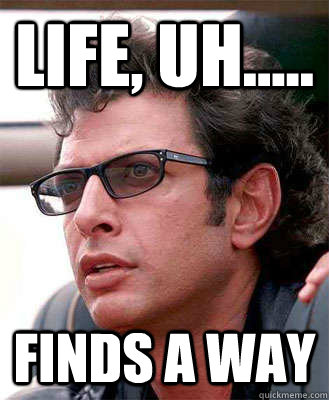
Let that sink in for a second. This was an action film, and yes, there were catchphrases--"Life finds a way," "Hold onto your butts"--but the dialogue in general was witty and naturalistic. The words the writers chose meant something. They weren't just cliche filler to add impact to the protagonist's smell-the-fart face or to round out a "character" by giving them that one memorable tic. I think the only bad line in that movie is Lex's when she says, "It's a Unix system! I know this!" Calm down, kid, all you're doing is navigating among a screen of labeled boxes.

So, Jurassic World has a lot to live up to (and a lot of bad sequels to live down). Can it do it?

It opens with Judy Greer seeing her sons off. They are going on vacation and, as a last warning, she jokily tells them that if something chases them, they need to "run." This is one of this trailer's two callbacks to that moment in the first film when Ellie Sattler, clenching her jaw, basically wills herself to run the last few feet from a raptor into Alan Grant's arms.

And then we see it. The park. As John Hammond meant it to be. The doors open. Those doors, you know the ones, you've dreamed about them every night since you were twelve, opening for you like some kind of prepubescent fantasy in which your desires for sex and adventure and unknowability and dinosaurs are all tangled up together, only to be replaced, later, by dreams about the pulsing sound the TARDIS makes when it lands in your street and the Doctor beckons you inside.

In the trailer, the monorail whooshes into the most beautiful theme park you've ever seen, apologies to Disney. There are lots of monorail shots; Jurassic World wants to make sure you see the monorail. There is a huge plaza teeming with visitors, so we can expect major carnage. There is a lazy river where park visitors float by munching sauropods, so we can expect some quiet moments of wonder and awe (and maybe snot). There is an awesome 2-person vehicle that looks like a giant hamster ball; visitors can get a close-up look at the biggest dinosaurs this way, navigating the ball beneath their tree-trunk-sized legs. I think this means we can expect a rousing game of dino-kickball.
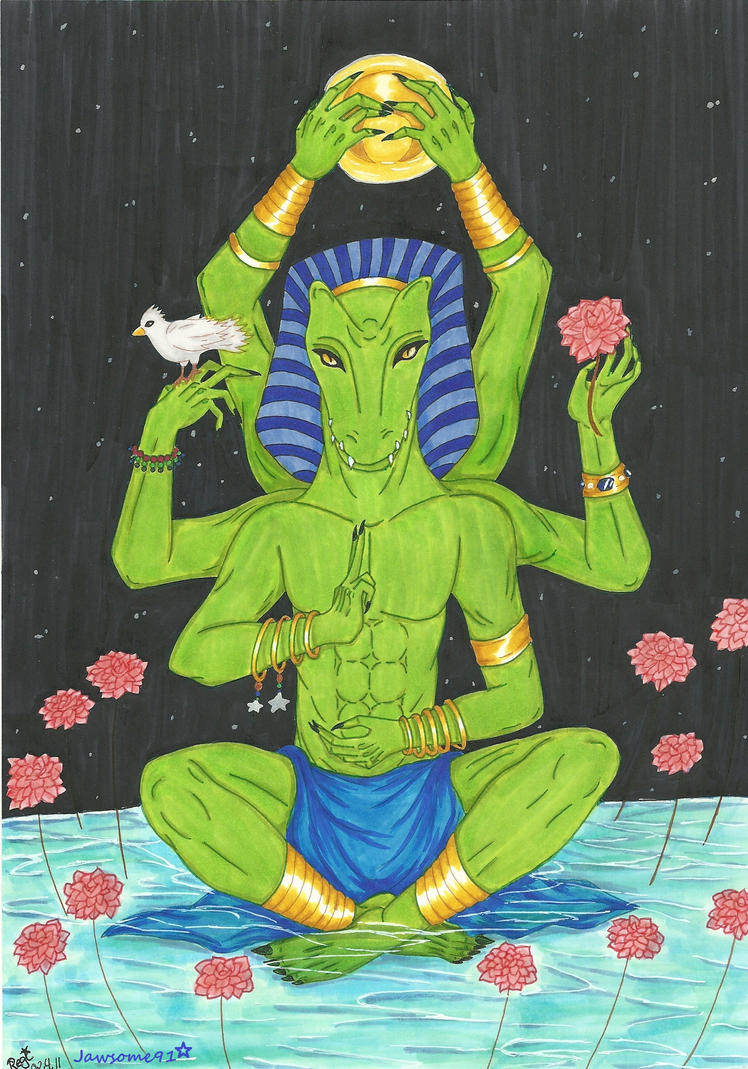
A crocodile's god?
Finally we see our first meatosaurus (I'm not allowed to call it a dinosaur, apparently, so I'll just adopt Lex's taxonomy). A shark is suspended above a large marine amphitheater. The music stops; for a second, it is silent. Then, from above, you see something rush up from out of the water: a gigantic set of jaws belonging to what looks like a crocodile's god. It blows T-Rex's goat-killing scene out of the water, no apologies, pun INTENDED (although T-Rex's lawyer-killing scene is still great, also no apologies to lawyers.)

At this point, the trailer reveals the film's conflict. I'd say "plot," but I think that's still a little thin on the ground. The amazing Bryce Dallas Howard, playing Science Lady, talks about how genetics is teh b3st science EVAR, accompanied by shots of mosquitoes in amber and egg-rotating robots. She also happens to mention that they've created a new dinosaur. Andy Dwyer, I mean, Burt Macklin, I mean, Chris Pratt plays a . .  well, it's not real clear what he is in this trailer. Is he a security guard? Army Special Forces? A dino detective? Whatever it is, it is clear that he will be both manly and suspicious of Science Lady and her efforts for Science.

There's not a ton of dialogue in this trailer, but one of Pratt's lines is especially bad. He's looking at a fence gouged with enormous claw marks. A man near him says, "Do you think it could have climbed out?" and Pratt says, "Depends." "On what?" the man asks. At this point, you think they're building suspense, and that Pratt is going to have some awesome and/or spooky answer like "Depends on whether it was chased out by something even bigger," or "Depends if its wings have come in yet or if it's still in its post-larval eight-legged stage," or even a lame joke, like "Depends on if it's eaten its Wheaties today."

But instead he says, "Depends on what kind of dinosaur they cooked up in that lab," which is, essentially, saying, "Depends on whether or not the kind of dinosaur that was in here was capable of doing that thing you just mentioned." Which is not a scary or awesome or even strictly necessary comment. If that was the most catchy dialogue they could find for the trailer, I begin to despair.

The end of the trailer is a 30-second tour of the terror we can expect from Jurassic World. A drop of blood falls on a man's wrist; he looks above him, fear dawning on his face. Two people dive into a waterfall. Chris Pratt tells us the hybrid dinosaur is a brilliant killing machine. There is a clip of raptors being released from cages like dogs, and running alongside Chris Pratt as he drives an ATV through misty jungle. There is a scene where Science Lady, all sweaty in a wife-beater tanktop, holds a glow stick out to her side (Alan Grant callback?). And there's a shot of the boy's face slowly eclipsed by the shadow of something large and heavy-breathing.

And over all of this, the Jurassic Park theme, composed by John Williams, played on a haunted piano by Samuel L. Jackson's dead hand.

In the process of writing this review, I have now watched the trailer eight times. I keep telling myself to temper my emotions, that the movie could be will probably be bad, but I cannot control my feelings. I mean, I cried the first time I saw this trailer. My excitement is already sky-high.

Thursday, August 28, 2014

Splash: A Twist on the Little Mermaid Fairytale

I recently watched the film Splash for the first time in twenty years or so. It was every bit as enjoyable as I'd remembered, but what I noticed this time that I hadn't really picked up on as a child is the fairy-tale nature of the story. Splash takes Hans Christian Andersen's The Little Mermaid and turns it into what Bruno Bettelheim might consider a true fairy tale, while updating it to the modern age.

The story starts out in the past, communicated by sepia-toned film and extra-sparkly water. Allen Bauer is a little boy on a boat, fascinated by something he sees out in the water. When he jumps in the water, his parents understandably freak out. However, the underwater shot shows him to be safe, floating effortlessly just beneath the surface, gazing into the eyes of a young mermaid who smiles at him. When he is retrieved from the water, the mermaid cries.

Flash-forward twenty years. Allan Bauer, played by an adorably awkward Tom Hanks, is a successful business-owner in New York City. He ends up falling into the ocean again and is rescued by the same mermaid, all grown up and played by Daryl Hannah, who is incandescent. This time, the mermaid decides that she loves Allan and that she wants to be with him, so she takes the form of a human woman with legs.

Allan and the mermaid, who takes the name Madison after Madison Avenue, spend a delightful few days in NYC. She learns English after only a few hours of watching television, and struggles to understand the human/American cultural norms she is surrounded by, such as wearing clothing, not eating lobster with your hands, etc. However, she is clear about the terms of their relationship: she has to leave after six days, or she can never return to where she came from. Allan thinks that there's just an immigration problem, so he offers to marry her. Before they can do this, however, she is doused with water and captured by a kooky scientist, played by Eugene Levy, who is ecstatic that he can now prove the existence of mermaids.

Splash mirrors the tale of The Little Mermaid in several ways. The mermaid saves the human man; she goes on land to be with him; but the terms of her time on land have limits After all, as Walter would say, "this is not 'Nam; there are rules" ... just as in every fairy tale or magical bargain. Apparently the movie originally even included a scene in which mermaid-Madison visits a sea-hag to make the bargain. However, the rule here does not mandate that she can't talk; it just puts a time limit on what Andersen makes clear--that once you become human, you never go back. The movie also anticipates the later Disney film, with the whimsical scenes portraying Madison's encounter with human culture. It's not too far a leap to imagine Madison trying to comb her hair with a fork, like Ariel. 

The big difference between Splash and Andersen's version is that Splash has a happy ending. But the ending doesn't involve the mermaid staying on land; it involves Allan going into the sea, to join Madison there. For him, the terms are the same: he can't go home. 

It's interesting that the ultimate transformation happens to him, and not her. This flipped ending makes me reevaluate the film's message entirely; rather than being a fairy-tale about a mermaid, it's a fairy-tale about a man. At the beginning of the film, Allan's burden is that he cannot love. Through the journey of his relationship with Madison, he learns that he can--and the effect of that knowledge is a transformation.

I also like how, even though the story is modernized, the film is book-ended with two underwater sequences that preserve the dreamy, otherworldly atmosphere of the fairy-tale.