Monday, March 13, 2017

In Which I Reveal That I am a Panther (and other writing things)

Last month I applied for some summer writing workshops and one of them required that I send a chapter of my novel, along with a detailed (2-3 page) novel outline.

This is gonna sound like Writer 101, but I hadn't really written a detailed novel outline yet. I had been working from a three-act structure outline (a great breakdown of this, and other plot structures, on Janice Hardy's blog here), but as far as a scene-by-scene outline ... nope. Didn't have one.

I'm a panther; this baby is my book.
This is fine. Writers often divide into plotters and pantsers--people who plan ahead of time, or people who write by the seat of their pants. I'm kind of in-between. I had the major beats charted out but when it came to writing the bits that connected those beats, I was a pantser. Note: my computer wants to autocorrect that to "panther," so that is my new official writing type.

When I wrote this detailed outline, I realized a couple things.

First, SO MUCH HAPPENS IN MY BOOK. It is kind of breathtaking all the shit that goes down. Which, on the one hand, is good. Fun, action-packed, complex novel, right? On the other hand ... holy wow there are like 4 major plotlines that I need to weave together so that events, themes, motivations, etc. converge at just the right moment.

Second, I have so much to gain from a scene-by-scene analysis of my book that I'm stunned and slightly guilt-ridden that I didn't do it earlier. How much stronger would my book be if I knew how scene 23 connects back to what's already happened, how it moves the plotlines forward, and how it sets up for events that will happen later?

But there's no sense in beating myself up for what I didn't do yet. This is my first novel; I'm learning.

What's really exciting is that I can suddenly see, like I'm Sherlock hallucinating diagrams in mid-air, how to make my book so much better. It's already good, but I'm about to make it kick-ass. And I can't wait.

Friday, February 17, 2017

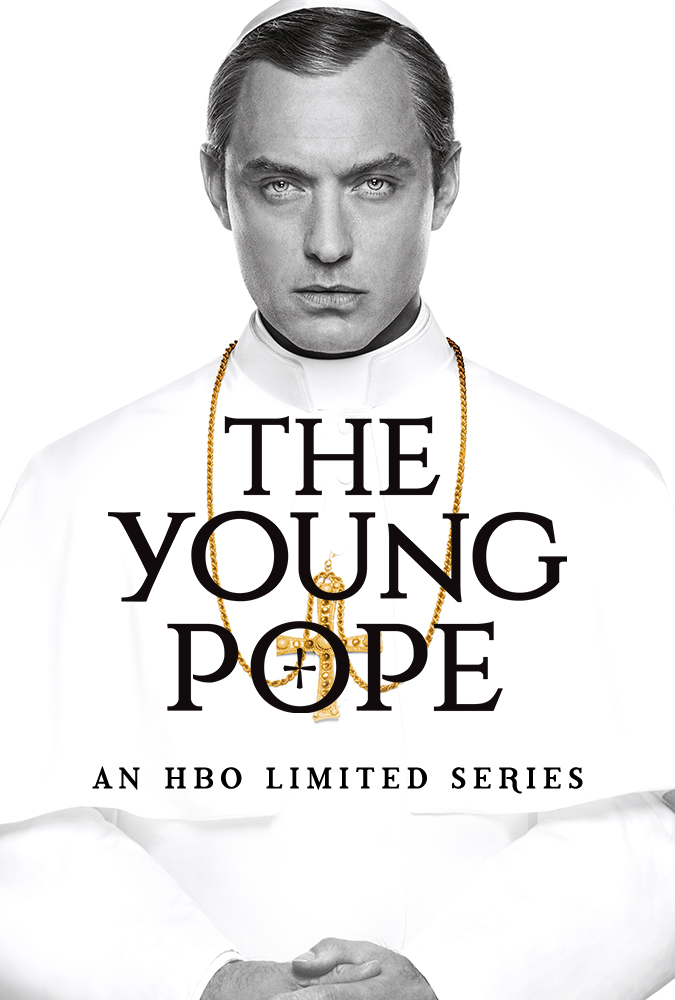
The Spiritual Hunger of the Young Pope

HBO has given me two gifts in the past six months: Westworld and The Young Pope. Both totally obsessed me from the moment I started watching them, taking up space in my brain in a way that TV doesn’t usually manage to. While I thought Westworld was incredible, ultimately The Young Pope, created and directed by Italian filmmaker Paolo Sorrentino, was more meaningful to me.

It made me miss believing in God.

This may strike people as odd, given that there has been a fair amount of criticism of The Young Pope’s non-reverential attitude towards the church. It has been accused of being sacreligious, Christophobic, Catholic-bashing, and “a disgusting insult to Christians.” If all you watched was the first or second episode, or only saw the (many! wonderful!) online memes, I might get that. Jude Law’s titular character, Lenny Belardo or Pope Pius XIII, is not anyone’s role model. He’s vain, power-hungry, and unfeeling in the model of many other TV antiheroes—and claims not to believe in God. He is surrounded, moreover, by conniving, grasping cardinals, eager at first to cement their role in his new administration, and then later blatantly deceptive to their pontiff when they see his effect on a dwindling church.

So, no, The Young Pope does not treat either the papacy, the Catholic church, or religious authority in general as beyond criticism, not by a long shot.

But if we can separate the show The Young Pope from the character of the young pope, the show itself is obsessed with God—His presence and His absence—in a way that feels genuine and reverential.

For one thing, the show is interested in exploring the idea of religious calling, the moment when a priest or nun feels as though God is telling them to pursue ministry for their life’s work. Lenny asks several of his closest friends to tell them about their calling and each story—often shown in flashback—is given the weight that such serious material demands. These callings, vividly recalled, are watershed moments in people’s lives, portrayed with subtlety, emotion, and no hint of mockery.

The show is also fascinated with religious visions. Lenny himself has several. Granted, their content sometimes borders on hilarious. In one vision, Lenny is surrounded by his predecessors, all decked out in the specific papal garb of their time period, and he asks them for guidance. When they respond with platitudes, he asks “Do you have anything better?” But the visions are more often lovely and serious, as in Cardinal Gutierrez’s repeated vision of the Virgin Mary and Lenny's encounters with the Blessed Juana.


While Sorrentino’s slow pace and lush aesthetic lends a dreamlike quality to what we watch, nothing about the lighting, the music, or the cinematography, diminishes the importance of these visions. To me, this means the show isn’t asking us to question these visions or their provenance. Instead, it asks us to accept them—whether as indicative of the character’s personal obsession (like Lenny’s repeated dreams of his parents) or an actual communication from the divine—as meaningful. The Young Pope doesn’t care if the visions are “real”—what it cares about is that they are real to the characters.

Here’s where I’ll argue that Lenny himself is not as much an unbeliever as he claims. Sure, he says in the first episode that he doesn’t believe in God. But the show makes it clear that he’s not necessarily questioning the objective existence of a deity; he’s really asking whether or not God has abandoned him. God matters to Lenny, maybe more than to anyone else in the show. And that, to me, is what The Young Pope is about—one man’s struggle to reconnect with God.

The fact that Lenny is not, by many definitions, a good person makes the show even stronger. It asks if someone can be unlikeable, even bad, and still be used by God? Can someone have a relationship with a God they don’t quite believe in? Is struggling to believe in God worth it?


Lenny seems to believe it is worth it. And he is able to access God to help the world—though his version of helping the world is fraught with casual violence, from dropping the newborn baby he helped conceive through the power of prayer, to causing the suicide of a young aspirant to the priesthood whom Lenny’s anti-gay policies excluded. There’s a lot of casualties in this show, including a kangaroo (RIP, kangaroo!), Lenny’s best friend, Cardinal Dussolier and Sister Antonia, a corrupt nun who Lenny asks God to smite. The show doesn’t let Lenny off the hook for the violence he inadvertently causes, although it does soft-pedal more than I wish it did. For instance, his punishment of serial child molester Cardinal Kurtwell was the kind of TV poetic justice that is only poetic, not actually justice. Dude needed to be kicked out of the church and subjected to criminal charges, imo.

(And, while we’re talking about ways The Young Pope fails, I hated its portrayal of the character Girolamo, a young man with cerebral palsy who basically just functions as a sympathetic sounding board for the devious Cardinal Voiello. Nicole Cliffe writes very convincingly and not a whit too critically of this treatment here.)

But on the whole, this show impressed me with its treatment of spirituality. It showed a wide variety of experiences with the divine and expressions of religious devotion. It acknowledged how life-changing religious belief can be, and the pain when that belief goes away. The show’s dreamlike quality itself replicates the ambiguity of spiritual experience—you feel that something important has happened, but you can’t quite explain it.

I can relate to that. I often felt, when I was younger, that God was speaking to me—through music, through literature, through prayer. Nature uplifted me; I used to talk to the moon, imagining it as the benevolent face of God in the sky. I’m no longer a Christian. I lost my faith in my late 20’s. But I don’t doubt the sincerity of my spiritual experiences growing up, or the fact that they shaped me into who I am today. I felt those things and they mattered.

And I still feel them today, although I don’t know if I believe there is a divine power motivating them. I’m comfortable with that ambiguity, though. I’m comfortable hungering for spirituality without knowing for sure if there’s a divine. And so, it seems, is Lenny Belardo.

Sunday, February 05, 2017

How to Grow New Ideas


I got a rejection last week that put me into a minor tailspin. "We liked this story a lot," it basically said, "but it didn't do enough new and different with X-plotline."

I wasn't upset about the individual rejection. It was kind, clear, and encouraging. It was also the 101st rejection I've ever gotten so, by this time, I'm a little less touchy about rejection than I used to be. These days when I get a rejection, there's less obsessing*, more ¯\_(ツ)_/¯ and "So it goes" and sending that piece out to a different venue.

What set me back was that it tapped into my deepest neurosis as a writer: that I'm not original.

Don't get me wrong; I have my strengths. I write beautiful setting, because setting is the first thing I notice in the real world. My first-draft prose is pretty clean, often lovely. I come up with funny names, I can structure tight scenes.

This fear isn't about the mechanics of writing. It's that I'm not saying anything new.

This is one of the reasons I haven't pursued writing literary criticism, although it's pretty much a requirement to progress farther in my profession. Forcing myself to write my dissertation was one of the hardest things I've ever done, partly because I don't think I have anything new to say about the writers I study. I haven't written any academic articles since then because the very idea makes me sick to my stomach: not an auspicious sign.

Writing fiction is easier because I enjoy it. It's fun. It's challenging. And the stories I tell are meaningful to me. Toni Morrison said, "If there's a book that you want to read but it hasn't been written yet, then you must write it." That's what I try to do.

But what if the stories I want to read--and thus want to write--are boring? Derivative? Trite?

(These are the words the ugly voice whispers.)

The thing with a fear like this is that, no matter what anyone says, you still believe it about yourself. I've talked about it with several other writers, all of whom say "I love your stories; you're brilliant; you're beautiful; we'd follow you into Mordor, etc." Y'know, normal encouraging friend stuff. Encouragement like that is kind and necessary--in this vocation, we need all the affirmation we can get, even if it feels like a bit of an echo chamber.

But it doesn't really address the fact that I can see what that rejection is talking about, and I don't know what to do about it. In my worst moments, I look at my work and all I see is lesser reflections of authors I love.

Which brings me to grappling with the central conflict: how do I have better ideas? Is it possible to make your brain better at having ideas? Or is the brain you're given the one you have, and you make do with the ideas it gives you?

My poet friend Molly (whose excellent book The Virginia State Colony for Epileptics and Feebleminded comes out in March) gave me at least a partial answer over the weekend: read widely. Watch widely. Experience widely.

Basically, in this model, the brain is what you feed it. If you keep feeding it the same raw material--if you watch the same kind of shows, perhaps, or read in only one genre or style, or only visit the same restaurants and stores--it will continue to churn out the same end product.

Or in a different metaphor, I can learn to grow better ideas by planting different seeds. Maybe watching a documentary instead of rewatching Buffy for the fifth time. Reading poetry, or biography, or science journalism, instead of the umpteenth Johnlock fic. Visiting new countries, new cities, or driving a new route home.

And even, as Molly suggested, trying to see the same places I always go--we both live in a small town, after all; there are only so many places--with new eyes.


*Although I still engage in a bit of rejectomancy just to see if my stats bear out my feeling that I'm getting better as a writer. And hooray--it looks like I am! My pro rejections have lately tilted towards more personal than form, with a few luscious "your submission has been shortlisted" plums to savor. It's the little things that keep us going through 101 rejections ...

Thursday, November 17, 2016

How to Deal


It's been a week and some change since the 2016 US Presidential election, and it's probably not a surprise that I wasn't excited about the results. I am, specifically, sad that we have lost a potential 4+ years with HRC's experience, level-headedness, and compassion at the helm; angry at injustice in our electoral system; and fearful of the future under the new administration, especially for people of color, immigrants, refugees, Muslims, LGBT+ folk, and the disabled, to name only a few. (If you want to learn more about why this election specifically threatens people of color and what you as a white person can do about it, this list of resources is incredible!)

These emotions are real and I want to give myself space to feel them, and to respond to them.

But alongside these feelings, I've felt despair. A sense of doom. A feeling, deeper than fear, that things will never get better and that I am helpless to stop what's coming.

For me, this emotion isn't helpful. It makes me want to roll over, to give in, to bury my head in books and TV and any other distractions. To turn the music up loud and scream "La la la, I'm not listening," so I don't have to deal with reality knocking at the door.

Because I'm fairly privileged--it's not my door that reality will come knocking on first.

But I know myself. I feel better when I make a plan. (Apparently I'm not the only one: HuffPo has a list here, as does Forbes.) What I'm doing now is thinking in circles of influence, starting with my closest circle, myself, and working outwards. The lists below represent actions I will take to help myself and others around me. And when I feel despair, I will look at this list and say "There's your action, darling: go forth."

For me, I will:
Eat and drinking healthy stuff.
Keep a regular sleep schedule.
Exercise.
Take medicines I have been prescribed.
Do mindfulness exercises for 5 min. each day.
Keep going to counseling.
Spend time outside 3x/week.
Journal.
Figure out a helpful "social media diet" so I can find a balance between staying informed and educated, and finding hope (my friend Andrea's blog post particularly helped with the hope part).

For my household, I will:
Spend less money so we can have more in savings, in case we have an emergency.
Encourage my partner to get all his medical needs met in case ACA is overturned.
Hug and cuddle my partner and pets.

For my close friends and family, I will:
Reach out, ask how they are doing.
Listen and not dominate the conversation with my own feelings.
When changes hit them, I will support with my words, my presence, and my finances when able.
When violence threatens, I will offer safety.
Not let them off the hook when they make thoughtless or bigoted statements, but call them out with kindness, as the Southern Poverty Law Center has outlined here.
Take responsibility and apologize when I make thoughtless or bigoted statements, as Maria Dahvana Headley urges here.

For my students, I will:
Require them to respond to each other with care and kindness.
Teach them to read and consume media critically, and to express themselves with nuance and thoughtful language.
Teach every class about the bystander effect and its corollary, and how to get past it.
Continue carrying my Black Lives Matter bag to show support for my black students and raise awareness of the movement on campus.
Be a safe space, a listening ear, and an advocate for my students' concerns.

For my community, I will:
Vote in local elections.
Volunteer or donate for local campaigns I believe in.
Attend rallies for causes I believe in.
Spend my money at locally-owned establishments.
Work with my Unitarian Universalist congregation to promote inter-faith dialogue.

For the greater state/country, I will:
Vote.
Volunteer or donate for campaigns and organizations I believe in (here's a list of 10 that are in particular need right now; and since the environment/climate change aren't on that list, here's a few more).
Call my representatives about issues that matter to me (check out the "We're His Problem Now" call sheet.)
Donate $5 each Friday to a cause that I care about.
Write the best damn stories, essays, and poems that I can.
Promote the voices of other writers--especially those in marginalized communities.

This is my call to action. If you're feeling scared, make a list, or borrow mine. Use what works for you, and jettison what doesn't--and feel free to share.


Thursday, March 17, 2016

WriteFest Exercise 3: Fan Fiction

For this exercise, Cassie asked us to pick a minor character or villain from a story we are familiar with, and write a scene from their point of view.

I chose Terry Pratchett's Death of Rats.

**

The Death of Rats picked his way through the spilled corn on the floor of the granary. In some shadowed, spiderwebbed corner of his mind, he remembered corn, remembered the feel of the kernels as he sheared through them with his teeth, the sweet dribble of juice that spilled down his throat as he chewed. But Death of Rats had not eaten corn in lo these many eons. He was here on other business.

Hanging from the rafters of the granary amid dusty beams of sunlight, a cage spun slowly. Three rats were inside, scurrying around. He heard their squeaks of fright, a scuffle of aggression. He examined the round structure, wondering how he’d get up there. The stuccoed walls were criss-crossed with wooden scaffolding. He slung his scythe over his shoulder, narrowed his eyes until only two slits of otherworldly blue showed beneath his hood, and began his climb. SQUEAK, he called up to the rats above, letting them know he was on his way. They lay silent and still on the floor of the cage.

At first, climbing the scaffolding was enjoyable. He was able to stretch his long legs and arms in ways that his job didn’t usually require of him. A lot of standing around, it was, interspersed with moments of riding his pale white rat-sized horse. It was rare that he got to be active. It was rare that he got to scurry.

He was scurrying now, though, leaping from beam to beam in an effort to make it to cage before the rats inside expired. Probably poison, he thought. It’s usually poison. He could hear their labored breathing slowing. If he didn’t make it there in time, he wasn’t sure he’d be able to guide them into the Rat Waiting room. Rats often had the mistaken impression that he was in charge of deciding whether they went into Rat Heaven, or Rat Hell. SQUEAK, he reassured them. Those decisions were made farther up the chain. He was only the guide.

This scurrying was taking too long, so he decided to make use of one of his privileges as the Death of Rats and leaped out into space. He did not fall, though, but instead ascended quickly in a column of blue light until he hung just outside the door to the cage. SQUEAK? he asked, knocking gently on the wire. He liked to be polite.

**

Monday, March 14, 2016

Writing, Twitter Anxiety, and the Myth of Production

This past fall, I became much more active in the SF/F writing community on Twitter. Almost immediately, I fell into one of the deepest and toughest bouts of anxiety I’ve ever faced.

Anxiety is treacherous and terrifying, and it is much more than just normal, day-to-day stress. And my anxiety wasn’t just caused by Twitter; it was also caused by an aggressive and demanding schedule at work, and my own tendency to equate my self-worth with my ability to produce writing in my spare time. But Twitter certainly exacerbated it.

Why did I join Twitter in the first place? I wanted to follow writers I admired, to get a glimpse of what they were doing that I could imitate. It was as if writing was learning how to knit or fix a tire, and I just had to follow the steps to success. So I followed several up-and-coming writers and started to take mental notes on where they were submitting, who they were following, what conversations were dominating the field.

I was quickly overwhelmed by how much competition I felt. Before, I’d been writing mostly in a vacuum. Now I had the freedom to compare myself to other writers 24/7. They were selling more than me, writing more than me. How were they writing so much when they were on Twitter all the time?

I didn’t feel as charming or as interesting as everyone else I followed. Outside, I was all “jokes jokes jokes” and inside I felt lonely and afraid and worthless. I was afraid I’d be pushed out of the community before I really got a chance to be in it. I was afraid that I’d do something wrong or bad or stupid online; I couldn’t really tell how I was being received, and it was intimidating. I felt pressure to produce, pressure to be funny and clever and to have something to say about the movie I was watching, book I was reading, music I was listening to, burrito I was eating.

Beyond that, I felt anxious about the platform itself. I wanted to get retweets, likes, comments, and follows. Was it okay if I commented in a friendly manner on someone’s Tweet, or was I annoying them by crawling up in their mentions? If I said the wrong thing, would I be made an example of?

In comparison to the anxiety and tension I felt on Twitter, Facebook suddenly felt like a warm bath.

This all coincided with my feeling of rejection in general. I had been writing fiction for a year and a half. I wasn’t having much success selling my stories, but I was generally optimistic about the outlook. For most of that time, when I got a rejection, I told myself that my story was just one step closer to finding a home. I imagined myself as an awkward but friendly duck, and the rejection as one tiny drop of water, rolling off my back. But soon after I became active on Twitter, I didn’t see rejection as a tiny drop anymore, but as the giant lake surrounding me.

I developed shoulder pain, an eye twitch, and an ulcer, all before I had my first panic attack in November.

Once I realized that my interactions on Twitter were a source of stress, I managed it. I only let myself have three Twitter check-ins per day, and I wasn’t allowed to check in at all before I wrote my words in the morning. I also unfollowed people—some of them the very people I had come on Twitter to follow, people I liked and respected—because they were stressing me out by being so good at their jobs.

A reasonable person probably would have quit Twitter at this point. But I hung on for dear life, knowing that it can be a useful tool to writers. Twitter is where I hear about calls for stories, get notifications from journals about when their reading periods open, find out about current SF events and topics of conversation. I went to a workshop I heard about on Twitter, one of the best choices I’ve made for my writing. And I met people to share my work with, creating a network for smart, plugged-in beta-readers.

Ultimately, the problem is with me, not with Twitter.

When I approach it the right way, Twitter is a great support system, a really kind and loving place. I’ve seen strangers give each other virtual hugs, tell each other that they’re wonderful, to keep writing and fighting in the face of sadness and fear and the crawling ooze of mortality. @posisailor tells her followers every day that they are worthwhile and that they can achieve their dreams. @gaileyfrey asks her followers to tell her about their successes, and then tweets affirmations. @matthaig1 writes kindly and transparently about struggles with depression. In short, I’ve seen love there.

And I want to be a more loving person. More loving to myself and more loving to others. I want to be a champion for others’ successes, and for my own.

But even with these guidelines and good intentions, Twitter can push my buttons. And the reason why comes down to the myth of productivity.

Let me give you an example. I posted a story of mine a couple weeks ago, and got some retweets by some authors who I *seriously* admire. And I was euphoric about it. Nothing feels quite as good as getting a compliment from someone who doesn’t know you in person. They only know you through what you produce and, in a way, these are the most powerful compliments of all—entirely merit-based (or so it feels).

But this is a trap I fall into too easily. Equating myself with what I produce. I’m only as valuable as what I’ve managed to accomplish in a given day—and not even that! Going to the grocery store, or a doctor’s visit, or taking a walk with my dog? None of these entirely-necessary duties contribute to my sense of productivity. Only writing-related work—writing, revising, editing, or submitting—matters to this mentality.

This is my bad mental habit. And it is contributing to making me sick.

I know I’m not alone here. I see this mentality on Twitter, among my friends who post their word-counts on good days and lament when they haven’t written anything on bad days.

But we are more than what we produce. I feel shitty when I don’t write, when I don’t have things out in submission, when I haven’t updated my blog in a while because those are measurable levels of “how I’m doing” as a writer. But regardless of how I'm doing as a writer, I have worth. I matter ... WE matter ... no matter what.

Monday, March 07, 2016

WriteFest Writing Exercise 2: Non-Human Characters

For this exercise, Cassie let us pull 4 random characteristics that real animals have on Earth, and then combine them to create a new character. And it had to be sentient. My four characteristics were:

1) Has antenna

2) Mother can birth one litter of babies with multiple fathers

3) Gills to breathe in water

4) Can see clearly in the dark

So welcome to the "cave-creepers."

**

Margarine huddles on the side of the subterranean lake, her antenna twitching incoherently as she expels streams of goo into the water from her mouth. Around her, seven male cave creepers flutter, their antenna brushing hers and each others. They radiate excitement and concern. As this is the first time they have witnessed birth, they worry about her health. Should she be this pale, her skin this dry? As they have all just become fathers, they are jubilant and relieved. Our children, the movements of their antenna all but shout, our children are healthy, and alive!

Silhouetted against the soft glow of the lake, twenty-two newborn cave creepers flit in the water. Their bodies are soft, slick, translucent. To the fathers, these babies look so vulnerable, so exposed. But they stretch their wings and fluff their neck-ruffs of fur in pride anyways, bragging to each other through flicks and swishes of antenna: See how fast that one swims? She will be a hunter, for sure. And the thickness of his hind legs? He will certainly win his year’s race to the surface.

Margarine, her wide eyes bleary with exhaustion, gazes blankly at her children. Her lovers settle around her, gently herd her up the rocky bank to the nest they have prepared. Here she will rest, here she will be fed and pampered through her recovery, while the seven fathers take turns watching their young ones grow and develop in the water. When the baby cave creepers have developed lungs and the thin membrane of their wings begins to stretch from wrist to side, they will crawl from the lake and it will be Margarine’s job to teach them all she knows. But for now, it’s the squish of fat grubs and the crunch of tender minnows that she looks forward to. A month or more of nothing, she manages to communicate. How delightful!

**

Monday, February 29, 2016

WriteFest Writing Exercise 1: Setting

Last week, I went to Houston to the WriteFest conference and took a 4-day workshop on speculative fiction with Cassandra R. Clarke. Houston was great--good food, great art--and the workshop itself was a wonderful experience. Cassie's discussions of writing were down-to-earth and inspiring, and she did a great job of fostering a community within our little group. And WriteSpace Houston is full of smart, fun, supportive writers ... I now want to start something like this in Oxford.

Anyways, here's my first writing exercise, based on Cassie's prompt about setting: Think of a place you either liked or hated from your childhood. Describe it, being careful to include some of the emotions you associate with this place.

**

I’ve run away from my mom in J.C. Penney’s again and I’m hiding in one of those circular racks of clothes, crouching down in the middle. I turn around, glancing out the slivers of space between the baggy shirts and polyester pants. People mill around outside my hiding place; a woman drags her son, red-faced and screaming, by the arm. A man stops to consider a tie, flips it over to glance at the price, walks away.

I am safe. Hidden. Quiet as the eye of a hurricane amid the bustle of the shoppers and the hum of the smooth jazz. Even when a middle-aged woman comes to thumb through the clothing, pulling out a hideous printed dress and holding it against her, she doesn’t notice my pale face shining in the gloom. If she did, she might shriek, or laugh—it’s happened before. But not this time. I press against the side of the metal frame, letting my head sink back into the clothing until it covers everything but the tip of my nose, the way I like to pretend I’m drowning in the tub.

I can see my mom over in the corner; she hasn’t noticed I’m gone yet. She will, though; when she does, my pleasure will be diminished by a spark of anxiety and guilt, pressing up from under my skin until the only recourse is to duck between the hangers and reveal myself to her, hugging her legs tightly and smiling up at her so she’ll forgive me and still buy me an Orange Julius later. But for now, I am a tiny god huddling in a dark circle, watching the world go by, gleeful in my invisibility.
**

Friday, February 26, 2016

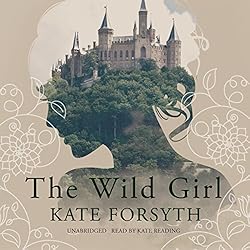
The Wild Girl: A moving novel about the literary history of fairy tales


Kate Forsyth’s book, The Wild Girl, was published in Australia in 2013 but has recently been released in the United States in both hardback, Kindle, and audio versions. It tells the story of an unsung hero of the history of fairy-tales: Dortchen Wild, the sweetheart and eventual wife of Wilhelm Grimm and the origin of many of the Grimm’s tales.

Dortchen grows up with six sisters and an invalid mother under the authoritarian rule of her apothecary father, Herr Wild, near Hesse-Kassel (part of what is known today as Germany). Their next-door neighbors, the Grimms, fascinate Dortchen, who befriends the youngest Grimm, Lotte. At a very young age, Dortchen develops a crush on Lotte’s older brother, Wilhelm, who has returned from university. She assists Wilhelm and his brother, Jacob, as they work on their project to collect German folktales. Along the way, Dortchen and Wilhelm fall in love (this isn’t a spoiler, as you learn about their relationship in the first chapter). But war, poverty, and family trauma keeps them apart, even as the stories they share draw them closer together.

Forsyth incorporates a lot of historical research into The Wild Girl, describing daily German life as well as providing the larger context of the Napoleonic wars. What I found most fascinating was the ways the Grimms researched and wrote their story collections. Fairy-tale nerds like me will appreciate the behind-the-scenes look at how 19th century fairy-tale scholarship worked — and how it sometimes didn’t work, as we see when Jacob and Wilhelm’s collections do not initially sell. And I am grateful to Forsyth for another book that draws attention to the unknown female storytellers of these famous tales. Her book Bitter Greens performs this task for the women behind the “Rapunzel” tale; in The Wild Girl, we have Dortchen Wild’s legacy as a consummate storyteller unearthed and preserved. That alone is reason to celebrate this book.

But Forsyth’s own storytelling is beautiful and heartbreaking on its own. Reading The Wild Girl was, at times, hard to continue because of what a painful story Forsyth has pieced together — some details imagined, I’m sure — for Dortchen. I had to take a couple of breaks from the book because of how sad Dortchen’s life became. Some of her experiences, particularly those with her father, are visceral and traumatic. But Forsyth manages to weave them together with the fairy tales (probably worthy of trigger warnings themselves) that Dortchen tells Wilhelm, creating a frame narrative in which Dortchen expresses her own grief and horror through her storytelling. I was reminded again of Bitter Greens, and the ways in which the women claim their own voices in the face of oppression and abuse.

In the face of Dortchen’s suffering, I broke down and wept when Wilhelm presented her with a new copy of the Grimm collection. He has re-written the tale “All Kinds of Fur” to shape it into a joyful tale rather than a horrific one. He tells her that “the whole reason for telling the fairy tales is to awaken the heart. To help people believe that misfortune can be overcome and evil can be conquered.” In The Wild Girl, Forsyth has created a powerful novel espousing the idea that stories can bring hope and healing.

The audiobook was read by Kate Reading, whom I know best as the female narrator of THE WHEEL OF TIME series. Her voice, warm and cultured, conveyed Dortchen’s vulnerability perfectly, while also capturing the gravitas of other characters.

*This review first appeared on FantasyLiterature.com, where I gave the book 4 stars.

Tuesday, February 23, 2016

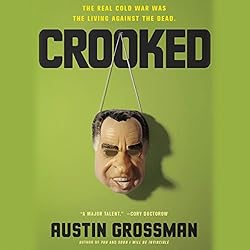
Hugo Nomination #5: Austin Grossman's Crooked


Austin Grossman’s Crooked is my favorite book I read in 2015*. I expected good things from Lev Grossman’s twin brother, but not much otherwise as I am not — was not — a big fan of Nixon or, indeed, of American history in general**. But by the end of the first chapter, I was breathless, thrilled, entertained and excited beyond my wildest expectations. Also, obsessed with Richard Nixon.

Crooked tells the story of Richard Milhous Nixon’s rise to power, complete with childhood in Yorba Linda, fight against the Communists as a young senator, Vice Presidency under Eisenhower, and his infamous Presidency. It’s all there: the Cold War, Vietnam, his visit to China, the moon landing, Watergate. And it’s no surprise that Watergate should be the linchpin for a novel about Nixon, but the secrets Grossman uses Watergate to cover up for are a surprise. Because Nixon isn’t the scowling jowls and flashing victory-sign you’re familiar with. Well, he is those things — but he’s not just those things. This Nixon is a sorcerer.

In Grossman’s alternate history of the mid-twentieth century, the faceless Communist threat is much more insidious than creeping ideology. Instead of restricting their arsenal to nuclear warhead, the Russians are developing supernatural weaponry. Invoking Lovecraftian forces both ancient and futuristic, they plan to infiltrate the American government with a man possessed. Senator Nixon is the unwitting victim of their first attempt and witnesses the horrific fallout. After this, the Russians have him in their pocket; he works as a mole, trying to ascertain what kinds of supernatural weapons the American government has developed.

Which, as it turns out, is quite a lot. And we get to watch Nixon as he unravels the mysterious origins of the American Presidency and the dark powers that come with it.

This by itself is all well and good. In the right hands, it might make for a book along the lines of Abraham Lincoln, Vampire Slayer, or Pride and Prejudice and Zombies. Take serious history/literature, mix with a dash of chthonic forces, and bam! You’ve got yourself an entertaining novel! And how else can I describe a book that includes a horror scene set in the Pirates of the Caribbean ride in Disney World?

Only that, despite how fabulous and over-the-top (in all the best ways) the plot sounds, the writing is even better.

Not that plot is separate from writing. It’s easy to think about it as something apart, that a story just “comes to us” and then it’s our job to set it down on paper, to make it pretty, to make it sing. Well, that’s not how it works, and Grossman has carefully plotted this novel, weaving his narrative of the dark forces behind national powers seamlessly into the events of Nixon’s presidency, and using the inciting event not only to set Nixon down his path towards power and the Presidency, but also to set up the book’s greatest antagonist. The sheer believability of Crooked in reference to American history is one of its greatest strengths; it takes the familiar and makes it strange and wondrous again. For instance, as Nixon drives across the country, “past the great slumbering presence below the Grand Canyon,” he comments on the Eisenhower interstate system, calling the highways “a runic inscription right across the country,” that managed to bind “the things that lived in the in-between places, strange survivors of long-vanished primeval forests.”

But my favorite part is Nixon. His voice dominates Crooked. You thought nobody could capture your attention, your imagination, quite like Cthulhu? Wait till you meet Grossman’s Nixon, a sneaky sonofabitch with no illusions about himself and yet all the illusions of power imaginable. He’s flawed, tortured, and completely compelling, managing to be self-deprecating, self-aggrandizing, and slyly hilarious at the same time. At times, he loathes himself so much that he dreams of getting away from Richard Nixon; when he’s given false passports, he sees them as “million-dollar bills, like the Count of Monte Cristo’s treasure chest,” a way out of the sham of a life he’s created.

As the mysteries behind government pile up, he quickly gets in over his head. Despite this, Nixon craves power, pursuing it with the dogged determination of an addict. When Henry Kissinger approaches him in 1966, asking him to consider thinking about running for President again, Nixon considers what it would mean to let himself dream this long-dead dream again:
There are the rare, rare moments when you’ve lost a thing you treasured and made your peace with that loss; your life is going to go on without it, a diminished place, but you’ve figured out how to twist yourself around just right to love and appreciate the new thing you’ve become — and then you’re given another chance at the thing you wanted so badly.
But he’s funny, too, at the most poignant or frightening moments. Introducing his constant companion, Gary, the carrier of the nuclear football, he lists all of the embarrassing or private bits of his life that Gary has had to witness, including “gastrointestinal episodes,” “furious arguments with Pat,” and “restrained, dignified weeping,” before concluding, anticlimactically, that “Gary and I were not friends.” Another list, this time in a classified document, tells of “potentially nuclear-resistant entities” who might represent a threat to the United States, including “Corn Men,” “Vladimir Ilyich Lenin,” “the British royal family,” and “Little Hare, a Native American trickster god of the Southwestern United States.”

Buried beneath Nixon’s paradoxical, ridiculous exterior is a darker truth, though — the unknowability of the human heart. He admits that, since a young boy, he felt an attraction to secrets. He remembers the moment when his mother taught him what a secret was, realizing that there was “more than one side” to him:
No matter how pure I seemed, righteous all the way through, there was always another me that couldn’t be put down, a sly one, a clever one, a lying one, a vicious one. I could be elected president of the whole goddamned United States but I’d always be Tricky Dick.
All of this secret-keeping takes its toll on Nixon as an individual and on his closest relationships, primarily his relationship with his wife Pat (who has some delicious secrets of her own!). He tells us in Chapter 2:
This is a tale of espionage and betrayal and the dark secrets of a decades-long cold war. It is a story of otherworldly horror, of strange nameless forces that lie beneath the reality we know. In other words, it is the story of a marriage.
In comparison to these painful human truths, Grossman doesn’t spend much time showing us the dark forces or the secret rituals that call them forth, causing some readers to complain that they wanted more of that aspect of the book. But I thought it was perfect. One of the effects of Lovecraftian horror is the sense that the big scary thing is always just out of sight, around the corner, down a well, or lurking beneath the waves. Spending a fraction of time actually with these creatures helps amplify our terror when we do see them. But I think there’s another reason, too, that Grossman spends most of his time on Nixon’s personal fears and failings. This is his clue to his readers that the horrors of power, of being a double agent, a spy, and a fake — of, essentially, being alone — are just as chilling as the supernatural horrors the novel keeps at bay.

I got to listen to Crooked as narrated by Kiff VandenHeuvel. VandenHeuvel nailed Nixon’s brusque delivery without being too over-the-top; his voice was rough but resonant as if his jowls were an echo chamber but, somehow, it did not devolve into caricature. It was one of the best audiobook experiences I’ve ever had — and yet, despite getting a review copy of the audiobook for free, I STILL went out and bought this in hardback… which should tell you something, because I’m pretty cheap!

*Well, other than City of Blades, but that actually released in 2016.
**This is pre-Hamilton as well.
**This review originally appeared on FantasyLiterature.com, where I gave the book 5 stars, easy.

Monday, February 22, 2016

Evolution of a Sci-Fi Class

A few years ago, I was approached by an academic publisher to review a proposal for a sci-fi textbook. I was excited to do it, but a little confused as well; I’d only taught a class on speculative fiction* twice, and was not an expert in the field by any means. But the publisher had found my name and course descriptions online, and if that was good enough for them, hey, why not?

When I opened the proposal, I was surprised by how limited the anthology was, despite including 50 stories. The proposal was focused on including “classic” stories—in the words of the author, “the greatest science fiction stories ever written." I had already expected it to be weighted towards the Golden Age of sci-fi--most anthologies I've seen are--but I wasn’t prepared for how heavily weighted it would be. Although the timeline of the anthology began in 1844 and went through 2011, fully half of those 50 stories were from just three decades—the 40’s, 50’s, and 60’s. And although I could tell that the author had made an attempt to include women and writers of color, I was still disappointed by the scope of science fiction represented in the anthology. In short, it didn’t seem to be doing anything different from any number of anthologies already out there.

Maybe I’m not as interested in the “classic” label as others are. What’s exciting for me about reading contemporary speculative fiction is how different it is from what I grew up expecting when I read an SFF story. Read most of the pro SFF magazines today and you’ll find a wide variety of storytelling modes, of prose styles, and of points of view.  I don’t mind social issues in my fiction. Yep, I’m one of those people. To my mind, speculative fiction is one of the most fun and most subversive ways to tip the [insert ideology here] status quo on its head and explore alternatives to the norm.

Fast-forward five years, and I’m teaching another speculative fiction class. In the interim, I’ve learned a lot more about the field by reviewing books, reading spec-fic magazines regularly, and writing SFF myself. I’m still not an expert, but this time around, I decided to challenge myself by building my own syllabus of stories instead of relying on an anthology. (You can view it here.)

The first question I asked myself was: okay, so what IS speculative fiction? Am I going to try to cover fantasy, sci-fi, horror, and magical realism in just one class? Or am I going to specialize?

Spoiler alert: I decided to specialize.

Now, my very specific jams are dark, lush fairy-tale retellings, but I’ve taught that class, and I wanted to do something new. I was also considering the bald economics of teaching at a university: keeping butts in seats, so to speak. I thought I had a better chance at attracting students with sci-fi than I did with a course titled “Kate’s Favorite Dark Fairytales," (subtitle: everybody bring a pillow to scream into).

I also wanted to keep cost in mind. The two sci-fi textbooks I’ve used in the past are both pretty expensive, upwards of $50 a pop. Instead, I began by choosing a book of criticism that would function as an introduction to the field: The Cambridge Companion to Science Fiction, pictured above. It’s a reasonably priced textbook with essays covering the chronology of SF, as well as major thematic issues and critical approaches to SF. The bulk of the rest of the reading I found available for free online.

Using some of the issues and themes that the Companion develops, I structured my class into 4 units. During the “Explorations in Space and Time” unit, we look at time-travel and space-opera. In the “Strange Encounters of the Third Kind” unit, we read some first-contact stories, and then examine the ways sci-fi has treated issues of race and gender. We discuss governments and political systems in our “Utopias and Dystopias” unit. And then end with a unit on ‘The Post-Human,” in which we cover artificial intelligence, human evolution, and the blending of biology with technology. The larger question we consider, through the lens of each of these units, is a question that a lot of literature asks: “What does it mean to be human?”

Because I’m teaching an undergraduate class, I felt like I couldn’t dispense entirely with the SF classics. That’s probably what the students have come to read, anyways: the Robert Heinleins and Arthur C. Clarkes of the world. But I wanted to balance the expected sci-fi stories with more modern stories to give the students a taste of what the field actually looks like today. Representation mattered, too; I consciously sought out writers of various backgrounds and identities. So for each unit, I chose a couple of the old standards, and then a handful of stories that fit the theme from recent issues of major spec-fic magazines. This way, I got to introduce my students to amazing authors that they may not have heard of like Charlie Jane Anders, Benjanun Sriduangkaew, Rachel Swirsky, Nnedi Okorafur, Ken Liu, and Kelly Link (and some online comics from my fave, Emily Carroll! *squee*)

I was terrified to do this when I started. I felt like I didn’t know enough about the field (it’s YUUUUUGE) and, even with what was available for free online, I was spoiled for choice. But I'm pretty happy with what I came up with; it helps that the students seem to be digging the choices I’ve made. However, as I’ve said repeatedly in this post, I AM NOT AN EXPERT, so I welcome feedback and story suggestions as I tweak this class for future iterations.

*by which I mean sci-fi, fantasy, horror, and magical realism ... and all the subgenres thereof.

Friday, February 19, 2016

Sorcerer to the Crown: A fun Regency Fantasy with a heart

Zen Cho’s debut novel Sorcerer to the Crown* is a heck of a lot of fun.

A quick description of it may not sound like it, though. It revolves around the magician Zacharias Wythe as he negotiates his new position as Sorcerer Royal, which, in England, has become more of a political position than a magical one. He has to cater to the needs of the English government by helping them negotiate alliances, navigate the shifting politics of the Royal Society of Unnatural Philosophers, and make appearances among the hoity-toity London upper crust. Unfortunately for Zacharias, he does not enjoy politics. His position is complicated by the fact that he took over the staff of Sorcerer Royal after the strange and unexplained death of his mentor and guardian, Stephen Wythe. Combined with the fact that Zacharias is a freed black slave, events seem to have conspired against him to make his position challenging, even dangerous.

The three central conflicts unfold, one after the other. England’s magic is draining away due to some unknown cause. England also needs to pacify Janda Baik, an island nation in the Malayasian archipelago, to maintain their foothold in the East against French incursions. To help out their Malaysian ally, Zacharias is asked to remove a contingent of female vampires who have been running amok in Janda Baik. Finally, the female magicians of England have been long ostracized from magical instruction or utility. Most English sorcerers are happy for this situation to continue unchanged, but Zacharias meets a young savant, Prunella. With the help of her inheritance (seven eggs of familiars, a rare and priceless commodity in a world lacking magic), she convinces him that women should be given access to magical education and even position.

As you’ll notice, all three of these problems have to do with England in some way: England’s power, England’s influence, England’s people and magical resources. Sorcerer to the Crown is as much a novel of the mundane realities of politics, national identity, and social institutions such as racism and sexism as it is about fairies, familiars, vampires, and other fantastical beings. But these institutions become villains every bit as frightening as the others. In fact, as Zacharias finds out, these enemies are harder to fight. He has a more difficult time being seen as an equal by the other sorcerers than he does getting out of the many assassination attempts set for him, like sentient flames and sucking puddles of death.

Some of the most disturbing moments in the novel happen in Zacharias’ mind, as he recognizes fundamental attitudes which will never change to accept him. He realizes, as his adopted mother does not, that he is not seen by the eligible young women of London as a potential mate. He is frustrated and hurt when young sorcerers whose careers he has helped are rude and dismissive in public. Prunella, too, recognizes the inequity that keeps her, a talented magician, in the position of governess and housemaid to more privileged young ladies.

So what is fun about Sorcerer to the Crown? Cho’s “fantasy of manners” has the wry wit and sparkling tone of a Regency novel. She lampoons both social mores and social frauds with the deftness of Austen or Dickens. Preening dandies, over-dramatic social-climbers, and backbiting politicians all feel the edge of Cho’s criticism.

The pace is also fun; once it gets rolling, the story moves from event to event at a breakneck pace. I agree with FantasyLiterature reviewer Bill Capossere that, at times, it seemed to move too fast and could have benefited from a few more beats or transition moments. But I always wanted to keep reading, to find out what happened next. In retrospect, I recognize some of the plot holes at the end that Bill references, but in the moment, they didn’t really bother me. I was enjoying it too much, too wrapped up in the fun of it.

To emphasize the lighthearted aspects, though, is not to say that Sorcerer to the Crown lacks a heart. The race, class, and gender struggles that Zacharias and Prunella encounter never feel as though they are there to make this “issue fiction.” They are seamlessly integrated into the characterization and world-building, and their delivery is so heartfelt and realistic that you can’t help but feel angry and sad and hopeless as well.

But to counterbalance the negative emotions are the positive emotions of warmth, love, and affection. Zacharias loves his mentor and guardians, the Wythes, and the friendship (and romance) that develops between him and Prunella is, dare I say, tender. As a sucker for tender, I really enjoyed the way Cho developed their relationship.

Sorcerer to the Crown is the first in a series, and I’m excited to see what happens next. I hope we get to see more Fairyland, more of the world outside of England, and especially more of the four remaining familiar eggs that Prunella inherited.

*Cho's eligibility post for 2015 can be found here and, yes, Sorcerer to the Crown is on it! I'm planning to nominate her for her short story "Monkey King, Faerie Queen" (short fic Hugo nom post coming up ....)

**This review originally appeared at FantasyLiterature.com, where I gave the book 3.5 stars.

Monday, January 18, 2016

The Fairy-Tale Archetype of the Sexy Witch

The Witch in Snow White
Last spring, I taught a class on fairy tales and fairy tale adaptations (you can see some of my student’s final projects here). I structured the class around archetypal characters or relationships, such as the Trickster or the Sibling Rivalry. One of the archetypes that I find the most fascinating, however, is that of the sexy witch*.

When I was growing up, I had one view of witches: the hairy-chinned, warty-nosed hag with the pointy hat. If she was stirring a cauldron of luminous green liquid, so much the better. Cackling on a broom was a given; a black cat familiar was just icing on the cake. Like Dorothy in The Wizard of Oz, I thought that all witches were “old and ugly.”

The identification of witchcraft with old women has a long history. Many folk and fairy tales dating back centuries feature a crone figure, sometimes with magical powers, such as the Slavic witch Baba Yaga, whose name is often translated as Grandmother Yaga. Shakespeare’s Macbeth features iconic scenes of witches described as “secret, black, and midnight hags” whose appearance is “so withered and so wild” that they look unearthly.

The positive side of the crone-witch is the preserver of memory, the bone gatherer with her folk remedies and midwifery skills. She is aged but ageless, in tune with deeper truths of the universe, like Mrs. Whatsit from Madeleine L’Engle’s A Wrinkle in Time. At the same time, she represents winter, death, and endings. Even in her darker connotations, though, the crone witch is not always evil as much as an uncanny figure whose goals may not be in line with the people who seek her help (as with Macbeth).

As I grew up, I realized that life was not that easily compartmentalized: not all villains twirl their mustaches, not all devils have pointy tails, and not all witches were old women. I encountered the even-more frightening figure of the witch who hides evil behind a lovely face. She is the mother-witch figure: a figure of fertility, sexuality, and power. While this figure can be good, Glinda was wrong when she told Dorothy that “only bad witches are ugly.” In many fairy tales, specifically those in the Aarne-Thompson 709 grouping (the same grouping where we find Snow White), the beautiful woman seeks to maintain her beauty and power at the expense of the life of an innocent. In the Scottish fairy tale "Silver-Tree and Gold-Tree," the queen Silver-Tree seeks to kill her daughter Gold-Tree for being more beautiful than she is. Like in the Snow White story, she asks to eat one of her daughter’s organs — in this case, her liver. When that fails, she stabs Gold-Tree’s finger with a poisoned splinter, and when that fails, she tries to poison her with a “precious drink.”

It is not explicitly stated that Silver-Tree is a witch. Perhaps she’s just a jealous queen. Perhaps all of her methods of murdering Gold-Tree are mundane, simply rat poison well-applied. But I don’t think so. Eating someone’s vital organ could merely be a handy way to prove that they are dead, and therefore no longer a threat to one’s status. But I think there is a more sinister reason that this story, and many others like it, demand the heart, lungs, liver, intestines, or a vial of blood from the young girl. In an act of black magic, the woman is taking the girl’s essence, using it to stay young and beautiful, similar to stories that circulated about Countess Elizabeth Bathory bathing in the blood of virgins to maintain her youth.

What’s behind these stories is complicated, but it’s clear that the concept of the mother-witch is bound up with sexuality. On the one hand, these horrific Snow White narratives mirror misogynistic fears of the mature woman as a sexual being. In medieval and early modern literature, there are concerns that women who know about sex can be corrupting influences on young women and men of any age. By passing on their knowledge of the arts of seduction, they can ruin a young girl’s innocence. By using their own knowledge of the arts of seduction, they can ruin a man’s reason, his reputation, his very life. The Malleus maleficarum, an early-modern treatise on witches, says that “all witchcraft comes from carnal lust, which is in women insatiable.”

So it’s no coincidence that charges of witchcraft, along with charges of incest and adultery, were brought against Anne Boleyn in her trial. Here was a woman who, in the public imagination, brought church, king, and country to its knees. Of course she was using some kind of weird sexy ju-ju to get inside Henry VIII’s head! Another early modern trial, that of Frances Howard, involved charges of magically-induced impotence (and inspired Thomas Middleton to write his play, The Witch, from which scenes in Macbeth were later taken). These stories blur the borders between sex and magic until every sexually-experienced woman becomes a potential witch. With these fears in mind, it only makes sense that fairy tales might portray the triumph of innocence and purity over sex-appeal and knowledge.

On the other hand, the portrayal of the beautiful mother-witch hearkens back to ancient pagan goddesses of fertility and life. The primeval procreative power that women have has always been mysterious and awe-inspiring. We see these positive aspects of the mother-witch in medieval tales of fairy queens who enrapture young knights, as in the lay of Lanval by Marie de France*. Lanval meets a young woman whose body was “well-shaped and sweet.” She offers him her love, “and what’s more, her body!” In the end, she rescues him from execution, bearing him off to Faerie and joy forever. We also see the life-giving aspects in the fairy godmothers that populate French fairytales. These marvelous women act as donors, giving treasure, talent, and luck to young men or women who need their help — often leading them to love and families of their own, perpetuating the cycle of life.

*Perhaps too fascinating. My students told me I talked about sex too much, although, as one of them said, that was “typical for an English class.”
*The divine Mallory Ortberg has a great post on The Toast about the lays/lais of Marie de France. Enjoy!


Thursday, January 14, 2016

Hugo Nomination #4: Dennis Mahoney's Bell Weather

I've already covered Naomi Novik's Uprooted and Cat Valente's Speakeasy (a novella). Which brings me to the second full-length novel nomination ... Dennis Mahoney's gorgeous, strange, spell-binding Bell Weather.

I had never heard of Dennis Mahoney before picking up Bell Weather, but the bright green ARC cover (different than the published cover shown to the left) drew me in: a monochrome print of a woman framed by trees. A hummingbird with bat-wings flies overhead. And over this, in bold white letters, “Enter the world of Root.” Well, with an invitation like that, don’t mind if I do.

Bell Weather is an adventure story following a young woman named Molly Bell as she escapes from two dangerous men bent on controlling her. Molly is a fantastic heroine, kinetic and indomitable. She is described as a “quicksummer spirit.” Associated with images of flowers and flame, she embodies warmth and tenacity, clinging to life through trials that would have killed a weaker person. Near the end of the novel, her brother Nicholas describes these abilities: “It is a quality of yours: a marvelous facility to wriggle out, adapt, and bloom without light.”

This inner vivacity, though, becomes a problem for her when she tries to hide in Root, a small town in the largely-unconquered continent of Colonial Floria. Despite her best attempts to blend in and become part of town life, Molly draws attention — starting fires, injuring herself, arguing with town drunks, and causing gossip by starting a romance with Root’s bachelor tavern owner, Tom Orange. Her relationship with Tom sustains and changes both of them, but eventually, the secrets of her past come to light, drawing danger down on the town as her pursuers come ever closer.

One of Bell Weather’s many strengths is Mahoney’s facility with description and setting. He has created a marvelous place in Root, a homely colonial outpost set on a continent of wonders. Like Molly herself, the weather around Root is volatile, ephemeral, unique. Storms wash the land in color. St. Verna’s fire is green electricity which clings to objects and people that it strikes. Winter comes all of a sudden in a yearly event called “deadfall” when the temperature plummets. Plants like ember gourds, which combust if not harvested on time, and stalkers, weeds that can walk, populate the land alongside animals like winterbears, grey wolfish bears. But Mahoney doesn’t rely on the strangeness of his setting alone. His language is lovely and surprising, too. He shows us hoarfur dripping from the branches: “the filaments gave the woods a moldering appearance, like a spiderwebbed crypt far below the earth.” The flight of cravens, small black birds afraid of everything, is described as “whirl[ing], dark and fluid, in a smooth gorgeous panic.”

This magical, inexplicable setting takes a backseat to the story, though, which is largely based in realism. Like most of the plot of Katherine Addison‘s The Goblin Emperor, the major events of Bell Weather could have happened in our world. Fantasy colors but doesn’t overwhelm the human action, which includes grueling journeys, deception and disguise, and several near deaths for Molly, her brother Nicholas, and her lover Tom.

This is where Bell Weather comes alive: its people. Mahoney doesn’t spend a lot of time detailing the personal appearance of his characters, but he communicates the feel of them through tiny gestures, impressions, and dialogue. Nothing communicates the terror that General Bell can inspire better than his line to his children, “There is God, and there is me. And God cannot protect you.” Or the expression of keen disappointment following joy: “Lem’s smile grew deformed, tangling in his beard.” Or the feeling of knowing you are loved: “Molly’s heart became an orange, nourishing and bright.” Or what is possibly the funniest line in the novel, exposing how the Bell children allow the household to decay around them while their father is away: “The laundry maid, wearing a ball gown and surrounded by feral cats she had taken to feeding, was caught reading a scandalous novel in the library.”

Bell Weather’s characters are each imperfect: impetuous, hard-headed, selfish, devious, or cowardly. But on the whole, Mahoney is remarkably generous towards his characters, portraying tenderness, attraction, and steadfast friendship. Even those characters we learn to hate or fear the most — General Bell, Nicholas, or the odious Mrs. Wickware — benefit from moments of vulnerability and flashes of deeply felt emotion. And part of Molly’s charm is that she can’t help but love the people who have hurt her the most. For instance, her father, General Bell, was harsh and abusive towards both of his children. However, after escaping her father, Molly remembers him: “She thought of hugging him the day he said goodbye and left for Floria, of reaching for his saber when he dragged her on the floor. Love made her miss him, love and all its afterbirth.”

To sum up, Bell Weather was a rewarding, thrilling, and surprisingly touching read. I look forward to reading more of what Mahoney has to offer, especially as he’s left Molly and Tom’s story at a nice stopping point, but with the potential for a follow-up.

*This review was originally posted at FantasyLiterature.com, where I gave the book 4.5 stars.